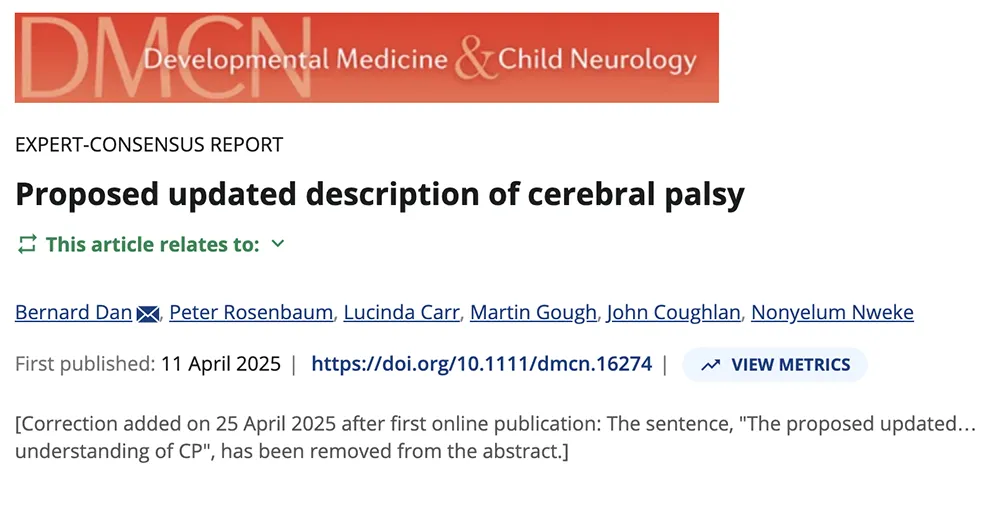
Cerebral palsy is a broad term used to describe lifelong movement and posture difficulties that begin early in life due to changes or injury to the developing brain. Research over recent years has greatly improved the understanding of CP, including the roles of genetics, inflammation, and brain function. Studies from around the world have also helped build a more complete picture of how CP affects people in different settings.
Importantly, people with lived experience of CP have been central in reshaping how CP is described, challenging outdated attitudes and advocating for more inclusive and respectful approaches. There is also growing recognition that adults with CP need better long-term support and services. This work presents a new, updated description of CP, developed collaboratively with people with CP, families, clinicians, researchers, and advocacy groups. It is intended as a starting point to guide future care, research, and policy, and to support ongoing discussion and improvement. Click on the banner below to read the full article.